

Scrum for
Large Projects
Scrum is often associated with smaller, highly focused teams, but the framework can also be scaled for large and complex projects. When multiple Scrum Teams work together toward a shared outcome, additional coordination, collaboration, and release planning become essential.

Scrum Teams often indicate larger-scale delivery
Product Owners and Scrum Masters may be involved
Planning, coordination, and release visibility become essential
Large Scrum Projects at a Glance
As Scrum scales, the core framework remains valid, but coordination layers are added to help multiple teams move in
alignment toward shared release outcomes.
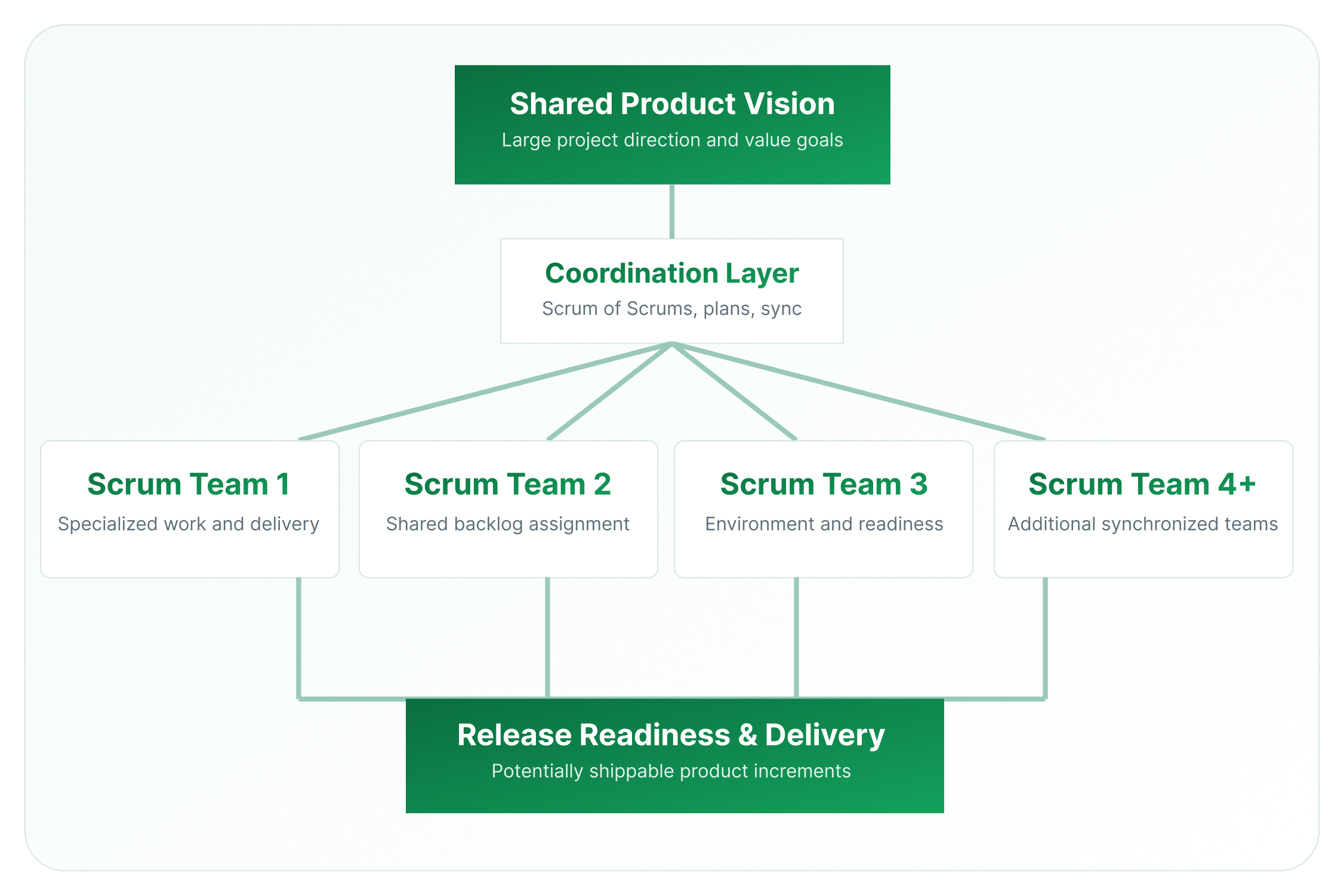
This visual shows how multiple Scrum Teams can stay aligned through shared planning, coordination, and release readiness./p>
When Scrum scales for larger projects
Scrum can support large and complex projects by extending coordination across multiple teams. As the scope grows, projects often involve several Scrum Teams working in parallel, along with additional Product Owners, Scrum Masters, and shared planning needs.

Typical indicators of a large Scrum project
- Multiple Scrum Teams working toward one shared outcome
- More than one Product Owner or Scrum Master involved
- Dependencies across teams, environments, or deliverables
- Greater need for synchronization and release coordination

What changes as the project grows
- Communication becomes more structured
- Planning happens at both team and project level
- Shared resources and environments require coordination
- Release readiness needs broader visibility across teams
What large Scrum projects need in addition to standard Scrum
The Scrum framework remains relevant at scale, but larger projects benefit from added planning, coordination, and visibility to keep teams aligned.

Shared project structure
A large project needs clear team structure, role alignment, and ownership across the wider initiative.
Cross-team planning
Teams need coordination around backlog assignment, priorities, and dependencies that affect more than one team.

Resource and environment coordination
Shared resources, specialized skills, and common environments must be planned so teams can work without unnecessary delays.

Release readiness visibility
A shared view of readiness helps multiple teams understand what must be complete before release.
How coordination works across teams
Large Scrum projects succeed when teams stay connected through regular communication, shared planning, and ongoing visibility into progress and blockers.
Typical indicators of a large Scrum project
- Scrum of Scrums meetings
- Cross-team communication plans
- Shared backlog and dependency tracking
- Release planning and readiness reviews
What changes as the project grows
- Keeps teams from working in isolation
- Improves alignment across deliverables
- Reduces blockers and late-stage surprises
- Supports smoother large-scale delivery
