

Scrum Phases &
Processes Overview
Understand how Scrum projects move from vision to release through five structured phases and nineteen core processes.
5
Project Phases
19
Scrum Processes
100%
SBOK Aligned
3
Core Roles
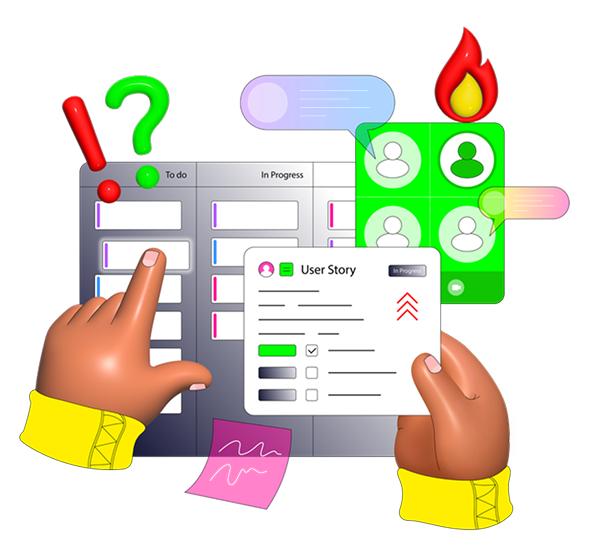
Five phases. One connected
delivery system.
Each phase focuses on a distinct stage of project flow — from defining vision to shipping value and learning.
Initiate
Vision & setup
Plan & Estimate
Stories & commitment
Implement
Create & refine
Review & Retrospect
Validate & improve
Release
Ship & learn
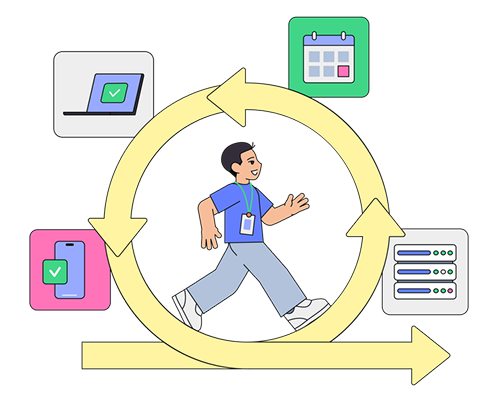
The Scrum lifecycle can be understood through five connected phases: Initiate, Plan and Estimate, Implement, Review and Retrospect, and Release. Together, these phases show how Scrum projects move from vision and planning to delivery, validation, improvement, and release.
Initiate
The Initiate phase defines project direction, identifies key roles, forms the team, and creates the early backlog and release outlook.
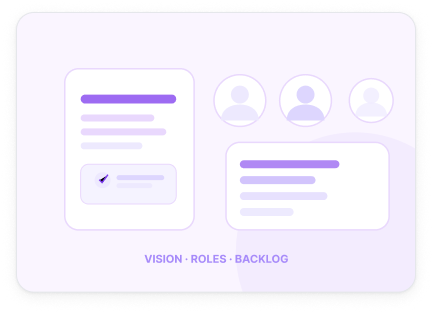
The Initiate phase includes six key processes. These establish the project vision, identify the Scrum Master and stakeholders, form the Scrum Team, develop Epics, create the Prioritized Product Backlog, and conduct Release Planning.
This phase gives the project its initial structure and direction — helping teams understand why the project exists, who is involved, what the big pieces of work are, and what the release path looks like before Sprint-level planning begins.
 Main Focus
- Set the project vision
- Identify roles and stakeholders
- Establish initial backlog direction
 Why It Matters
- Creates alignment before execution starts
- Helps the team understand value and scope
- Supports clearer planning in later phases
PROCESSES IN THIS PHASE
Plan & Estimate
Translates backlog direction into workable Sprint-level items, estimates, commitments, and tasks — the bridge between vision and execution.
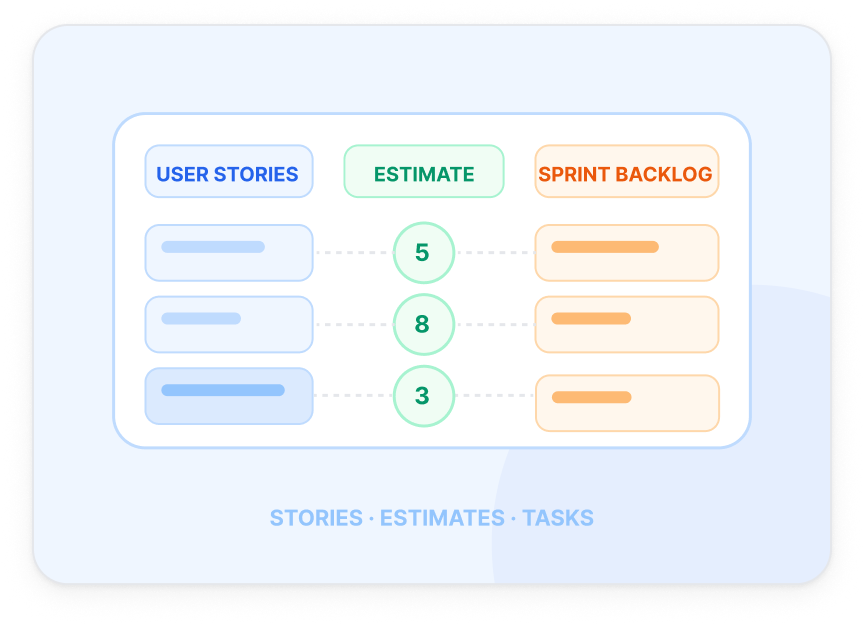
This phase helps the team move from high-level backlog thinking to Sprint-ready work. It supports breaking Epics into User Stories, estimating the effort involved, choosing what the team can commit to, and organizing that work into actionable tasks.
It is an important bridge between vision and execution because it turns intent into a practical plan for delivery in the upcoming Sprint.
 Main Focus
- Create and refine Sprint-ready work
- Estimate effort at story and task level
- Build a realistic Sprint Backlog
 Why It Matters
- Improves delivery clarity and team alignment
- Supports realistic commitment
- Prepares teams for focused implementation
PROCESSES IN THIS PHASE
Implement
The Sprint plan becomes real work. The team creates the product increment, coordinates daily, and refines the backlog as the Sprint unfolds.

This phase is where the Sprint plan becomes real work. The team creates the product increment, coordinates daily, and refines the backlog at regular intervals so the broader product direction stays aligned with learning and stakeholder needs.
Even while implementation is underway, Scrum remains adaptive. Teams do not stop learning just because development has started; they continue to inspect, coordinate, and adjust.
 Main Focus
- Create Sprint deliverables
- Coordinate through Daily Standups
- Refine the backlog continuously
 Why It Matters
- Keeps execution visible and aligned
- Supports fast coordination inside the team
- Allows learning to inform future priorities
PROCESSES IN THIS PHASE
Review & Retrospect
Focuses on reviewing Sprint output, validating the work done, and identifying ways to improve how the team works in future Sprints.
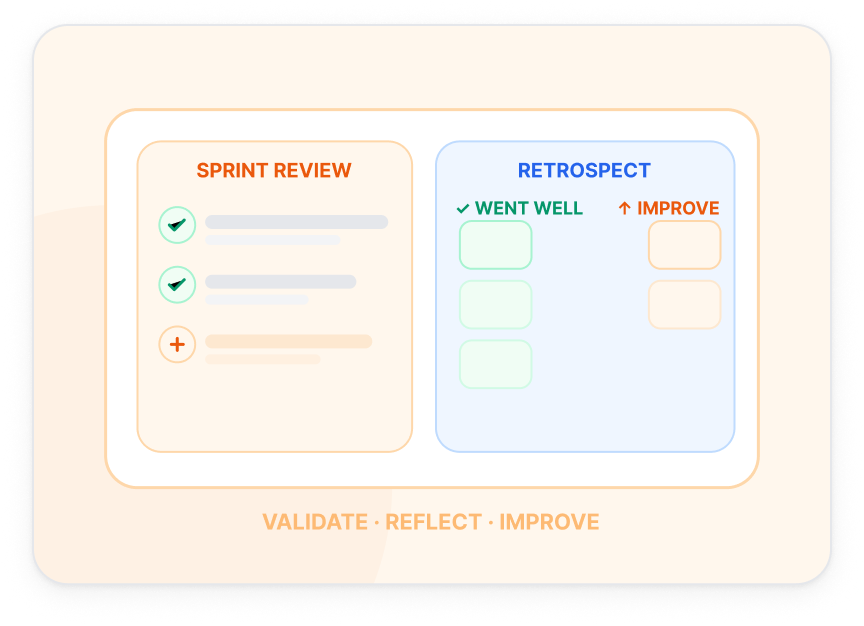
This phase helps the team look at both the product and the process. The Sprint output is demonstrated and validated, while the team also reflects on what worked well, what did not, and what should change in the next cycle.
It is a key part of Scrum’s inspect-and-adapt mindset because it connects delivery feedback with process improvement.
 Main Focus
- Review and validate the Sprint increment
- Reflect on team practices and methods
- Improve future Sprint performance
 Why It Matters
- Ensures deliverables meet expectations
- Creates regular improvement loops
- Strengthens learning across Sprints
PROCESSES IN THIS PHASE
Release
The Release phase emphasizes delivering accepted work to the customer and capturing lessons learned from the full project cycle.
This phase focuses on making accepted deliverables available to the customer and formally reflecting on the release itself. It helps ensure that value is not only created but also delivered, and that lessons learned are documented and internalized.
Release reinforces the idea that Scrum is not only about internal team rhythm — it is also about getting completed work into the hands of users and improving future delivery based on experience.
 Main Focus
- Ship accepted deliverables
- Capture release-level learning
- Close the loop on delivery
 Why It Matters
- Turns accepted work into realized value
- Supports organizational learning
- Improves future releases and projects
PROCESSES IN THIS PHASE
Master the Scrum lifecycle with PMstudy
Learning the Scrum phases and processes helps professionals see how Scrum projects progress in a structured, value-driven way. Explore PMstudy's learning options to strengthen your practical knowledge and certification readiness.
